
You have planned your dream outdoor kitchen. You have chosen the perfect grill, mapped out the counter space, and yes, you are installing a sink. But here is where most homeowners hit pause: the cabinet underneath.
Do you really need an outdoor kitchen sink cabinet, or is it just another expense?
Here is the problem: too many people install beautiful outdoor sinks but completely ignore the cabinet situation. They mount the sink to a basic frame, leave plumbing exposed, or worse, use indoor cabinets that warp and rot within months. Even in small backyards where every inch counts, the question remains: is a proper sink cabinet worth the investment?
This is not about upselling you on unnecessary features. It is about understanding what you actually need versus what sounds nice in a magazine spread. By the end of this article, you’ll know exactly when an outdoor kitchen sink cabinet makes sense, what materials actually survive the elements, and how to choose the right setup for your space and budget.
Let us cut through the marketing fluff and get to the honest answer.
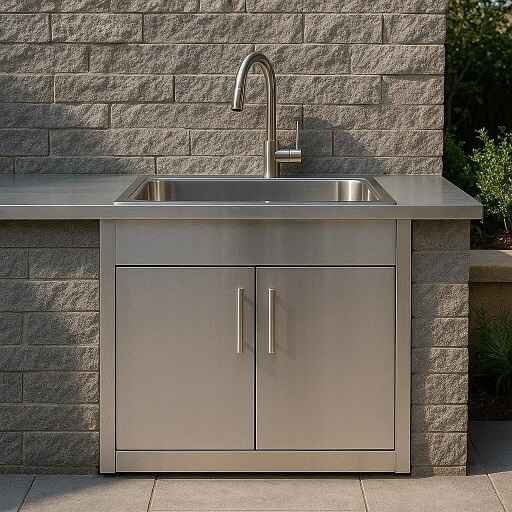
Table of Contents
What Is an Outdoor Kitchen Sink Cabinet?
An outdoor kitchen sink cabinet is a weather-resistant storage unit designed to support your outdoor sink while concealing plumbing, providing storage, and protecting everything from rain, sun, and temperature swings.
Think of it as the foundation and protection system for your outdoor sink, but built to survive conditions that would destroy a standard kitchen cabinet in weeks.
Indoor vs. Outdoor Cabinets: What is the Difference?
Here is what separates them:
Indoor cabinets use MDF, particle board, or standard plywood with decorative veneers. They are designed for climate-controlled environments. Expose them to moisture, UV rays, and temperature fluctuations, and they swell, warp, delaminate, and rot.
Outdoor kitchen cabinets are constructed from marine-grade stainless steel, high-density polyethylene (HDPE), marine-grade polymer, or sealed masonry. They feature drainage systems, rust-proof hardware, and UV-resistant finishes. The materials don’t just tolerate weather, they are engineered to withstand it year after year.
The difference is not subtle. An indoor cabinet outdoors becomes a liability. A proper outdoor sink base cabinet becomes a functional asset that lasts decades.
Do You Really Need a Sink Cabinet? (HONEST ANSWER)
Let us be direct: it depends on your priorities and how you use your outdoor kitchen.
When You DO Need an Outdoor Kitchen Sink Cabinet:
- You want concealed plumbing: Exposed pipes look unfinished and are vulnerable to damage from weather, pests, or accidental impacts.
- You need storage: Outdoor cooking requires tools, cleaning supplies, trash bags, and dish soap within reach.
- You live in harsh climates: Rain, snow, intense sun, or freezing temperatures demand proper protection for your plumbing connections.
- You are building for resale value: A complete outdoor kitchen with proper cabinetry significantly boosts home value compared to exposed, DIY setups.
- You want longevity: Proper cabinets protect your investment and reduce maintenance headaches over time.
- You use your outdoor kitchen frequently: The more you cook outside, the more you’ll appreciate organized storage and professional appearance.
When You DON’T Need One:
- You have a basic utility sink: If you are just washing garden tools occasionally, a simple wall-mount sink works fine.
- Budget is extremely tight: You can start with a basic frame and upgrade later.
- You are testing the concept: Not sure if you’ll use an outdoor kitchen much? Start minimal.
- You have alternative storage nearby: If you have a shed or garage steps away, dedicated sink storage matters less.
- Your climate is consistently mild and dry: Less weather protection needed, though aesthetics and function still matter.
The honest truth? Most people who invest in a quality outdoor kitchen sink regret skipping the cabinet. It is the difference between a professional setup and something that looks, and functions, like an afterthought.
Pros and Cons of Outdoor Kitchen Sink Cabinets
Let us break down the real advantages and legitimate drawbacks.
Pros
Storage That Actually Makes Sense
An outdoor kitchen sink and cabinet combo gives you dedicated space for dish soap, sponges, trash bags, paper towels, cleaning brushes, and basic tools. Everything you need is right where you need it, not cluttering your indoor kitchen or scattered across the patio.
Concealed Plumbing Protection
Exposed pipes are not just ugly, they are vulnerable. Outdoor kitchen cabinets with sink integration hide your plumbing from UV damage, freezing temperatures, and accidental kicks. This protection extends the life of your plumbing connections and reduces leak risks.
Professional Appearance
There is a massive visual difference between a properly installed sink cabinet for outdoor kitchen and exposed pipes with a basic frame. If you have invested thousands in your outdoor space, the cabinet completes the look and shows attention to detail.
Increased Home Value
Real estate appraisers recognize the difference between complete outdoor kitchens and basic setups. Weatherproof outdoor kitchen cabinets signal quality construction and add measurable value to your property.
Organized Workflow
When cooking outside, having cleaning supplies, trash access, and prep tools stored directly under your sink creates an efficient work triangle similar to indoor kitchens. You’ll notice the difference immediately.
Cons
Significant Upfront Cost
Quality outdoor sink base cabinets are not cheap. While indoor cabinets might cost a few hundred dollars, proper outdoor units range from $800 to $3,000+ depending on size and material. This is often 30-50% of your total outdoor sink project budget.
Weather-Related Wear
Even the best materials require maintenance. Stainless steel can show water spots and minor surface rust. HDPE can fade slightly. Seals and hardware need periodic inspection. Nothing is truly maintenance-free outdoors.
Installation Complexity
Outdoor kitchen sink cabinets require level surfaces, proper drainage, and careful plumbing integration. Poor installation leads to water pooling, cabinet damage, and plumbing failures. Many homeowners need professional help, adding to costs.
Space Requirements
Cabinets add depth and width to your outdoor kitchen footprint. In tight spaces, this matters. You’ll need to carefully plan dimensions to maintain comfortable clearances around the sink area.
Potential for Moisture Issues
Even outdoor-rated cabinets can develop problems if water gets trapped inside. Poor drainage design, inadequate ventilation, or standing water leads to mold, mildew, and deterioration over time.
For a detailed comparison of all major outdoor cabinet materials, including PVC, aluminum, and masonry, see this comprehensive guide.
Best Materials for Outdoor Sink Cabinets
Material choice determines how long your investment lasts. Here’s what actually works.
Stainless Steel (Best for Most Situations)
Marine-grade 304 stainless steel stands as the gold standard for outdoor kitchen cabinets with sink installations. It resists rust, handles temperature extremes, cleans easily, and maintains its appearance for decades with basic care.
Why it works: The chromium content creates a passive layer that self-heals minor scratches and protects against corrosion. Grade 304 contains at least 18% chromium and 8% nickel, providing excellent corrosion resistance for most climates.
Best for: Coastal areas, humid climates, and anyone prioritizing longevity and professional appearance.
Watch out for: Cheaper grades (201 or 430) that rust quickly. Water spots show easily, requiring regular wiping. Cost runs higher than alternatives.
HDPE/Polywood
High-density polyethylene (HDPE) or polywood cabinets offer excellent weather resistance at moderate price points. These plastic-based materials won’t rust, rot, or corrode. They are lighter than metal, making installation easier.
Why it works: The material is solid throughout, so scratches don’t expose vulnerable cores. UV stabilizers prevent fading and brittleness. Many products use recycled materials, appealing to eco-conscious buyers.
Best for: Budget-conscious buyers, DIY installers, and climates with extreme temperature swings.
Watch out for: Lower-end products can look plastic and cheap. Heavy impacts can crack the material. Some color options fade over years of direct sun exposure.
Marine-Grade Polymer
This category includes various synthetic materials engineered specifically for outdoor use. Think of them as advanced plastics designed to mimic the look of traditional materials while providing superior weather resistance.
Why it works: Manufacturers combine different polymers to create materials that resist UV damage, moisture penetration, and temperature extremes. Many offer wood-grain textures that look surprisingly realistic.
Best for: Those wanting a traditional aesthetic with modern durability, and situations where weight matters.
Watch out for: Quality varies dramatically between manufacturers. Some products don’t hold up to marketing claims. Research specific brands thoroughly.
Masonry Base (Concrete/Brick)
Building a custom concrete or brick base with finished countertops creates a permanent, ultra-durable outdoor sink cabinet. This approach works especially well when matching existing hardscape.
Why it works: Masonry handles weather perfectly, supports enormous weight, and can be customized to any size or shape. Properly sealed concrete resists moisture and looks intentional.
Best for: Permanent installations, custom designs, and those building complete outdoor kitchen islands.
Watch out for: This approach is permanent, no moving it later. Requires skilled labor or advanced DIY skills. Poor drainage design leads to water pooling inside the structure.
Sink Cabinet Sizes & Layout Tips
Getting dimensions right matters more than most people realize, especially when working with limited space.
Standard Dimensions
Most outdoor kitchen sink cabinets range from 30 to 48 inches wide. A 36-inch cabinet accommodates most standard outdoor sinks while providing storage on both sides of the plumbing.
Depth typically runs 24 inches to match standard countertop depths. This provides enough interior space for P-traps and shut-off valves while maintaining reasonable reach across the counter.
Height sits at 34-36 inches, matching standard counter heights for comfortable use.
Small Backyard Solutions
When space is tight, consider these strategies:
Corner installations maximize available space while creating efficient work triangles. A corner sink cabinet for outdoor kitchen setups uses space that often goes wasted anyway.
Narrower cabinets in the 30-inch range still provide function without dominating small patios. Pair them with wall-mounted storage for items that don’t need to live under the sink.
Vertical storage inside cabinets uses height rather than width. Install shelves or door-mounted organizers to maximize cubic footage.
Critical Clearance Requirements
Leave at least 15 inches of counter space on one side of the sink for prep work and dish staging. This prevents the frustrating situation where you have nowhere to set things down.
Maintain 36-42 inches of clearance in front of the cabinet for comfortable movement. People need room to stand, bend, and move without bumping into furniture or grill carts.
Plan electrical outlets at least 24 inches from water sources, following outdoor electrical code requirements. Even if you don’t need power now, future flexibility matters.
Best Outdoor Kitchen Sink Cabinet Options (2026)
While we’re building our comprehensive product database, here are the types of configurations that consistently perform well based on material, design, and real-world durability.
Premium Stainless Steel Category
Example: 36-inch marine-grade 304 stainless steel sink base cabinets with soft-close doors, adjustable shelving, and integrated drainage systems. These typically range from $1,800-$3,000 and represent the longest-lasting option for most climates.
Look for welded construction rather than fastened panels, commercial-grade hinges, and units specifically designed for outdoor use rather than repurposed indoor commercial units.
Mid-Range Polymer Category
Example: Weather-resistant HDPE cabinets in the 36-42 inch range with adjustable legs, moisture-resistant doors, and adequate ventilation. Price points typically fall between $900-$1,600.
These offer excellent value for moderate climates and represent the sweet spot for many homeowners balancing cost and durability.
Budget-Friendly Options
Example: Basic powder-coated aluminum frames with weatherproof panel inserts, running $600-$900. While less durable than premium options, these work adequately in covered outdoor kitchens or mild climates.
Expect shorter lifespans and plan for eventual replacement rather than permanent installation.
Custom Masonry Solutions
Example: Built-in concrete or brick bases finished with tile or stone countertops. Costs vary widely based on size and finish materials but typically start around $1,200 for materials plus labor.
These work beautifully when integrated with existing hardscape and offer the most customization potential.
Can You DIY an Outdoor Sink Cabinet?
The short answer: maybe, depending on your skills and what you’re building.
When DIY Makes Sense
- You have construction experience: If you have built decks, framing, or furniture, an outdoor sink cabinet is manageable. The skills translate well.
- You are using simple materials: Building a basic frame and adding weatherproof panels is straightforward. Repurposing marine-grade materials keeps costs down.
- You have proper tools: Circular saws, drills, levels, and measuring tools are essential. Cutting metal requires additional equipment like angle grinders.
- Your design is straightforward: Simple rectangular cabinets without complex features reduce difficulty significantly.
- You’re handy with plumbing: Installing shut-off valves, P-traps, and drain lines requires basic plumbing knowledge.
When to Hire Professionals
- Electrical work is involved: Outdoor electrical requires permits and proper weatherproofing. Mistakes create serious safety hazards.
- You are working with expensive materials: Mistakes with $2,000 worth of stainless steel hurt. Professional installation often includes warranties.
- Plumbing complexity increases: Hot water lines, gas connections, or complicated drain routing benefit from professional expertise.
- Local codes are strict: Some jurisdictions require licensed contractors for outdoor kitchen installations. Check before starting.
- You value time over money: DIY projects take significantly longer than professional installations, especially for first-timers.
A hybrid approach works well: hire professionals for plumbing and electrical, then handle the cabinet assembly yourself if you are confident in your carpentry skills.
Due to code requirements, consulting with or hiring a professional is often necessary; you can read about key plumbing and permit considerations here.
Cost Breakdown: What You’ll Actually Spend
Understanding total costs helps set realistic budgets. Here’s what outdoor kitchen sink cabinets really cost in 2026.
Budget Range: $600-$1,200
This gets you basic powder-coated metal frames, simple HDPE cabinets, or DIY builds using treated lumber and weatherproof panels. Expect 5-10 year lifespans in moderate climates.
These work fine for occasional use or when budgets are tight, but plan for eventual replacement rather than permanent installation.
Mid-Range: $1,200-$2,500
This range delivers quality HDPE or marine-grade polymer cabinets, entry-level stainless steel options, or custom masonry bases with basic finishes. You’ll get 15-20 year performance in most climates.
This represents the sweet spot for most homeowners, significant durability improvement over budget options without premium pricing.
Premium Range: $2,500-$5,000+
Top-tier 304 stainless steel cabinets, custom masonry work with premium finishes, or integrated outdoor kitchen islands with sink sections. These should last 25+ years with basic maintenance.
This range makes sense when building complete outdoor kitchens designed for frequent use and maximum home value impact.
Additional Costs to Consider
- Plumbing installation: $300-$800 depending on complexity and distance from water sources
- Electrical work: $200-$600 for GFCI outlets and proper weatherproof wiring
- Countertops: $400-$2,000 depending on material (tile, granite, concrete, or stainless steel)
- Sink fixture: $150-$800 for the actual sink and faucet
- Permits: $50-$300 depending on local requirements
- Delivery and installation: $200-$500 if using professionals
Total project costs typically run $2,000-$8,000 for complete outdoor kitchen sink and cabinet installations, with the cabinet itself representing roughly 25-40% of the total.
Final Verdict: Is an Outdoor Kitchen Sink Cabinet Worth It?
Yes, if you care about durability, convenience, and creating a functional outdoor cooking space.
Here is the reality: an outdoor sink without a proper cabinet works, but it is a compromise. You sacrifice storage, aesthetics, plumbing protection, and long-term durability. If you are investing in an outdoor kitchen that you’ll actually use, the cabinet is not optional, it is foundational.
The real question is not “do I need one” but rather “which type fits my situation.“
For frequent outdoor cooks in variable climates, stainless steel outdoor kitchen cabinets with sink integration provide unmatched longevity and performance. The higher upfront cost disappears over decades of reliable use.
For budget-conscious homeowners or those in mild climates, quality HDPE or polymer options deliver solid performance at moderate prices. You’ll get years of service without premium pricing.
For occasional users or temporary setups, basic weatherproof outdoor kitchen cabinets or DIY solutions work adequately. Just understand the limitations and plan accordingly.
The worst choice? Using indoor cabinets or completely exposed plumbing in an otherwise expensive outdoor kitchen. This creates maintenance headaches, looks unfinished, and wastes money on inevitable replacements.
Make the decision based on how you’ll actually use the space. If your outdoor kitchen sees regular use during warm months, proper cabinetry pays for itself in convenience and durability. If you are building your dream outdoor entertaining space, cutting corners on the sink base cabinet undermines everything else you have invested in.
Want to dive deeper into creating the perfect outdoor kitchen setup? Check out our comprehensive guide on choosing the best outdoor kitchen sink for small backyards, and explore our detailed outdoor kitchen cost breakdown for 2026 to budget your entire project effectively.
The right outdoor kitchen sink cabinet transforms a basic utility sink into a professional-grade cooking station. Choose materials that match your climate, size the cabinet to fit your space, and invest at the level that matches how you’ll use it. Your future self, and your guests, will appreciate the difference.