
If you are planning an outdoor cooking space, you have probably realized that a regular kitchen fridge won’t cut it. An outdoor kitchen fridge is built differently because it has to survive what your indoor appliances never face: direct sunlight, humidity, rain, and temperature swings that can fry a standard compressor in one summer. Whether you are hosting weekend barbecues or just want cold drinks within arm’s reach of the grill, understanding what makes an outdoor refrigerator truly outdoor-ready will save you money and frustration down the road.
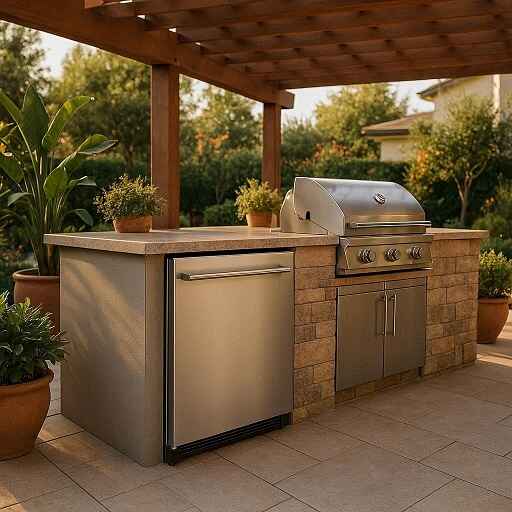
Table of Contents
What Is an Outdoor Kitchen Fridge?
An outdoor kitchen fridge is a refrigerator specifically designed to operate in exterior environments. Unlike indoor models, these units are built with weatherproof materials, sealed components, and compressors that can handle heat and humidity without breaking down.
The biggest difference? Ventilation and construction. Indoor fridges vent heat from the back, which means they need space behind them and cannot handle high ambient temperatures. Outdoor models typically vent from the front and use stainless steel exteriors that resist rust and corrosion. The internal components are also insulated better to maintain consistent cooling even when it’s 95°F in the shade.
Think of it this way: an indoor fridge expects to live in a climate-controlled 68–72°F environment forever. An outdoor fridge is ready for whatever nature throws at it.
Types of Outdoor Kitchen Fridges
Not all outdoor fridges are created equal. Here is how they break down:
Built-in Outdoor Fridge
A built-in outdoor fridge is designed to fit seamlessly into your outdoor cabinetry or island. These units have front ventilation, which means they can be surrounded by structure without overheating. They are usually pricier but offer a polished, integrated look that feels like a natural extension of your outdoor kitchen. If you are going for a permanent setup with counters and storage, this is your move.
Freestanding Outdoor Fridge
A freestanding outdoor fridge works as a standalone unit. You can place it on your patio, deck, or poolside without needing custom cabinetry. These models still need proper ventilation around them (especially on the sides), but they are more flexible if you are not ready to commit to a full buildout. They are also easier to move if you rearrange your space later.
Mini Outdoor Fridge
A mini outdoor fridge is perfect if you just need to keep drinks cold or store a few essentials without taking up much space. These compact units fit under counters, on carts, or tucked into smaller patios. They are budget-friendly and work well for condos, apartment balconies, or secondary cooling zones near a fire pit or seating area.
Key Features to Look For
When shopping for an outdoor refrigerator, keep these features front and center:
- Weather resistance: Look for stainless steel construction (preferably marine-grade 304 or 316) and UV-resistant seals. Cheaper models with painted finishes will rust and fade quickly. The American Society for Testing and Materials (ASTM) provides standards for outdoor appliance materials that can help you understand quality differences.
- Temperature range: Make sure the unit can maintain 32–50°F even when outdoor temps hit 100°F or higher. Some fridges struggle in extreme heat.
- Ventilation type: Front-venting is essential for built-ins. Rear-venting models need clearance and are not ideal for enclosed spaces.
- Capacity: Measured in cubic feet. Think about what you’ll actually store, such as beverages, food prep ingredients, leftovers, and size accordingly.
- Energy efficiency: Outdoor fridges run harder than indoor ones, so an energy-efficient compressor will save you money over time.
- Locking doors: Helpful if you have kids, pets, or live in a neighborhood where critters might investigate.
Outdoor Kitchen Fridge Size Guide
Choosing the right size depends on how you plan to use your outdoor space.
Small Backyards
If you have a compact patio or just want a secondary cooling spot, a mini outdoor fridge (1.5–3 cubic feet) is plenty. These handle drinks, condiments, and small snacks without overwhelming your space. They are also great if you are working with limited budgets or are not sure how much you’ll use it yet.
Medium Patios
For mid-sized outdoor kitchens or entertaining spaces, go with a 4–6 cubic foot model. This size accommodates a solid amount of food and beverages, think a few six-packs, burger ingredients, side dishes, and ice. It is the sweet spot for most homeowners who cook outdoors regularly but don’t need commercial-level storage. This is also where you’ll start finding more variety in built-in and freestanding options.
Full Outdoor Kitchens
If you are building a serious outdoor cooking zone with a grill, sink, and prep area, consider a 7+ cubic foot unit or even dual fridges (one for food, one for drinks). Larger units give you the flexibility to meal prep outside, store marinated meats overnight, and keep your indoor fridge from getting raided every time someone wants a cold beer. For more ideas on maximizing your setup, check out our guide on Outdoor Kitchen Storage Solutions.
Is a Regular Fridge Okay for Outdoor Use?
Short answer: No.
Indoor refrigerators are not built to handle outdoor conditions. The compressor will overheat in direct sun or high temperatures, seals are not weatherproof, and the exterior will rust or corrode from moisture. You might get away with it for a few months under a covered patio, but it is not a long-term solution.
Even “garage-ready” fridges struggle outside because they are still designed for enclosed, semi-controlled environments. If you are investing in an outdoor kitchen, don’t cut corners here. A failed indoor fridge will cost you more in repairs and replacements than buying the right unit upfront.
According to the Association of Home Appliance Manufacturers, appliances rated for outdoor use must meet specific environmental and safety standards that indoor models simply don’t have.
Outdoor Kitchen Fridge Cost
Pricing varies based on size, features, and brand, but here is what to expect:
Budget Range: Entry-level mini and freestanding outdoor fridges start around a few hundred dollars. These work fine for casual use but may lack premium features like stainless steel interiors or advanced insulation.
Mid-Range: Most homeowners land in this category, spending for a quality built-in or freestanding model with solid construction, good temperature control, and decent capacity. This range covers most reputable brands and sizes up to 6 cubic feet.
Premium Range: High-end units with commercial-grade materials, dual zones, glass doors, or larger capacities can run significantly higher. These are worth it if you are building a luxury outdoor kitchen or plan to use it year-round in harsh climates.
For context on budgeting your entire outdoor space, take a look at our Outdoor Kitchen Cost Breakdown.
Maintenance & Placement Tips
Even a weatherproof outdoor fridge needs a little care to last.
Shade matters: If possible, place your fridge in a shaded area or under a pergola. Constant direct sunlight forces the compressor to work harder, which shortens its lifespan and drives up energy costs.
Use a cover: When the fridge is not in use for extended periods (like during winter), invest in a quality cover. This protects it from rain, snow, and debris.
Ventilation is non-negotiable: Whether built-in or freestanding, make sure air can circulate around the unit. Check your manufacturer’s specs for clearance requirements and follow them. Poor ventilation leads to overheating and breakdowns.
Clean regularly: Wipe down the exterior with a stainless steel cleaner to prevent water spots and buildup. Clean the interior every few weeks, especially if you are storing raw meats or sticky beverages. Check door seals for cracks or wear and replace them as needed.
Check drainage: Some models have a drain plug or drip tray. Make sure it is clear so condensation does not pool inside or underneath the unit.
Conclusion
An outdoor kitchen fridge is not just a nice-to-have, but it is a practical upgrade that makes outdoor cooking and entertaining way more convenient. By choosing the right type, size, and features for your space, you’ll get years of reliable use without the headaches that come from trying to make an indoor fridge work outside. Focus on weather resistance, proper ventilation, and realistic capacity needs, and you’ll end up with a setup that keeps everything cold and your backyard ready for whatever you are cooking up.
FAQ
Can you use a regular fridge outside?
No, regular fridges are not designed for outdoor conditions. They lack weatherproof construction, cannot handle temperature extremes, and their compressors will overheat in outdoor environments. Even under a covered patio, an indoor fridge will deteriorate quickly from humidity and temperature fluctuations.
What is the difference between a built-in and freestanding outdoor fridge?
Built-in outdoor fridges are designed to fit into cabinetry with front ventilation, creating a seamless look. Freestanding models work as standalone units and can be moved more easily. Built-ins typically cost more but offer better integration with outdoor kitchen designs.
How much does an outdoor kitchen fridge cost?
Entry-level mini outdoor fridges start around a few hundred dollars, while mid-range models suitable for most homeowners range higher. Premium units with commercial-grade features and larger capacities can cost significantly more depending on size and features.
Do outdoor fridges use a lot of electricity?
Outdoor fridges typically use more energy than indoor models because they work harder to maintain cool temperatures in warm environments. However, energy-efficient models with good insulation can keep costs reasonable. Placement in shade and proper ventilation also help reduce energy consumption.
What size outdoor fridge do I need?
For small patios or drink storage, a 1.5–3 cubic foot mini fridge works well. Medium outdoor kitchens benefit from 4–6 cubic foot models. Full outdoor cooking setups should consider 7+ cubic feet or multiple units for food and beverage separation.
Can outdoor fridges withstand winter weather?
Quality outdoor fridges can handle cold weather, but extreme conditions may affect performance. If you live in an area with harsh winters and won’t use the fridge for months, consider using a weatherproof cover and possibly unplugging it during the coldest periods.